Privacy Fences in Huntsville
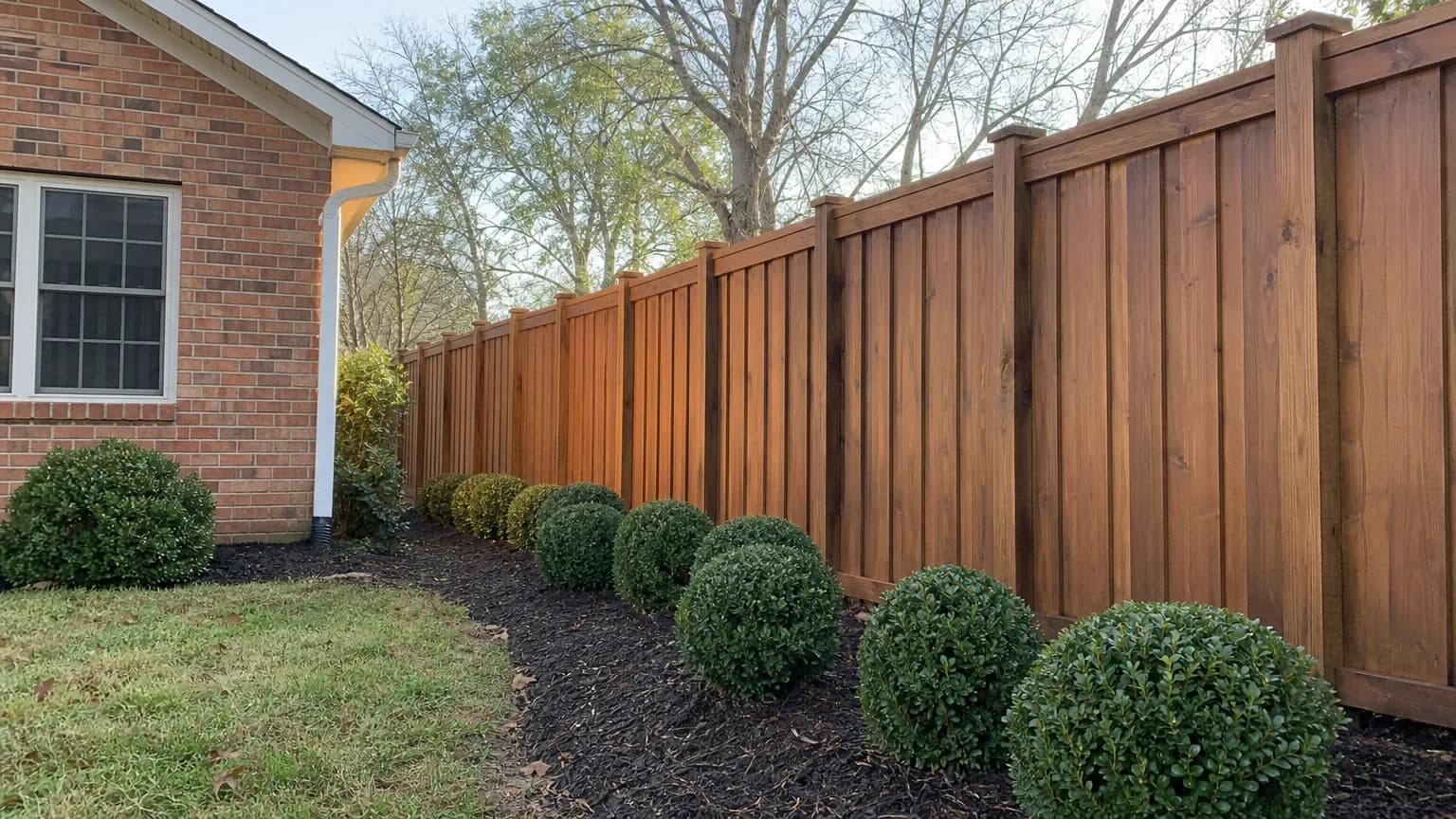
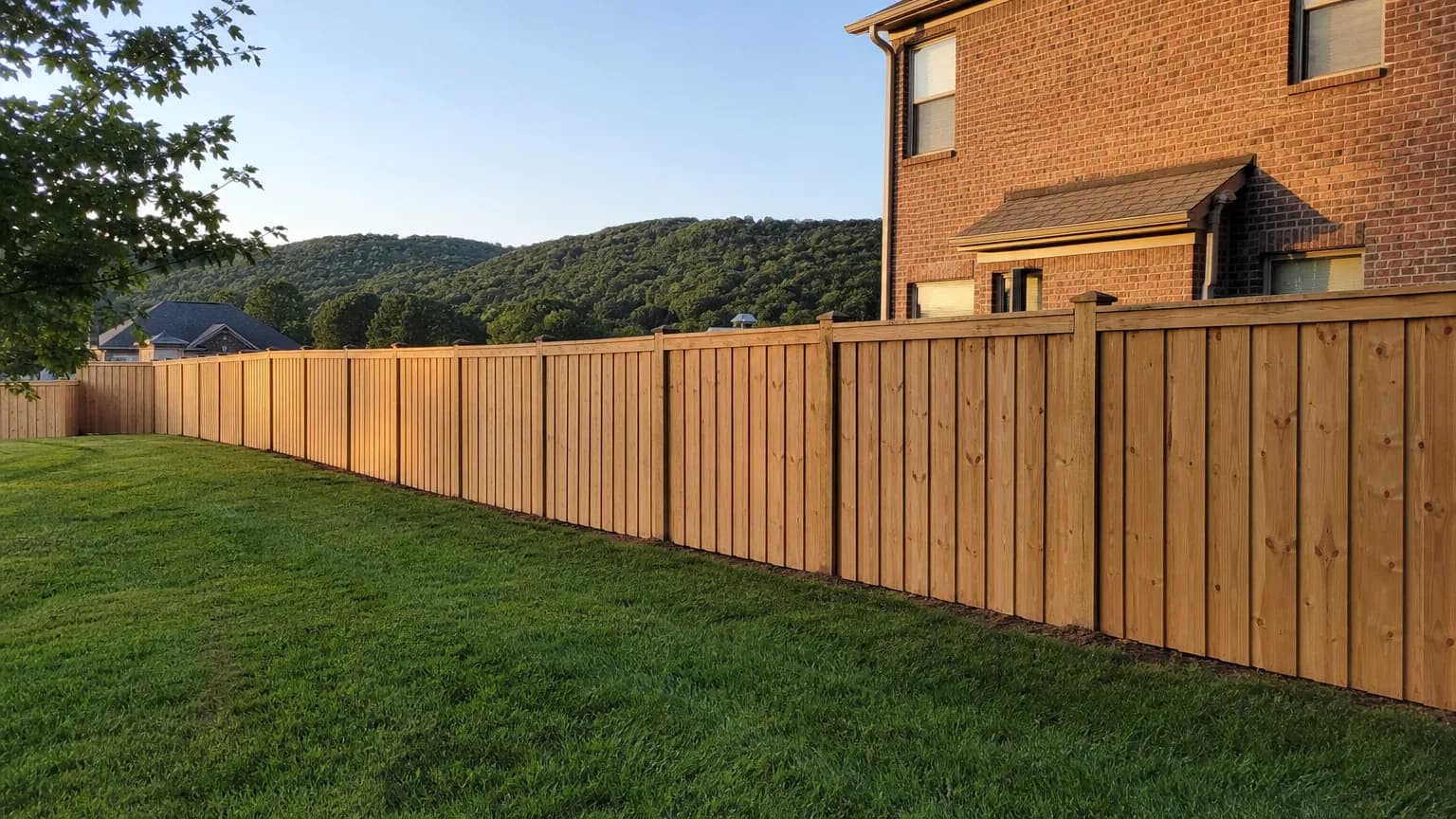
Most fence requests in Huntsville are for a 6-foot backyard privacy fence. The common builds are pressure-treated pine in a dog-ear or flat-top picket style, shadowbox (pickets alternated on both sides of the rails so the fence looks finished from either yard), and board-on-board, where overlapping pickets close the gaps as the wood shrinks. Cedar costs more than pine and is chosen mostly for looks and stability. Vinyl and aluminum privacy panels are the low-maintenance alternatives.
National cost guides put a wood privacy fence at about $25–$60 per linear foot installed. A typical quarter-acre backyard run is a few hundred feet, so the line length matters more than any other number in the quote. Read the full guide to privacy fences for styles, heights and how contractors handle slopes, gates and the side that faces your neighbor.
How tall can a backyard fence be?
Every city in the area sets lower limits in front yards than in back. Decatur's zoning ordinance, for example, caps fences at 4 feet in a front yard and 6 feet in rear and interior side yards in residential districts. Huntsville does not require a fence permit, but its zoning rules still apply. If you want anything taller than 6 feet, or a solid fence in front of the house, call the planning office before a contractor orders material.
What to ask before the posts go in
- Where exactly is the property line, and who confirmed it (a survey, pins, or a guess)?
- How deep will posts be set, and in concrete, gravel or both?
- Are posts rated for ground contact, and what fasteners hold the pickets?
- Which side of the fence faces out, and how will it follow the slope?
- Who calls Alabama 811 and who hauls away the old fence?
Chain Link Fences
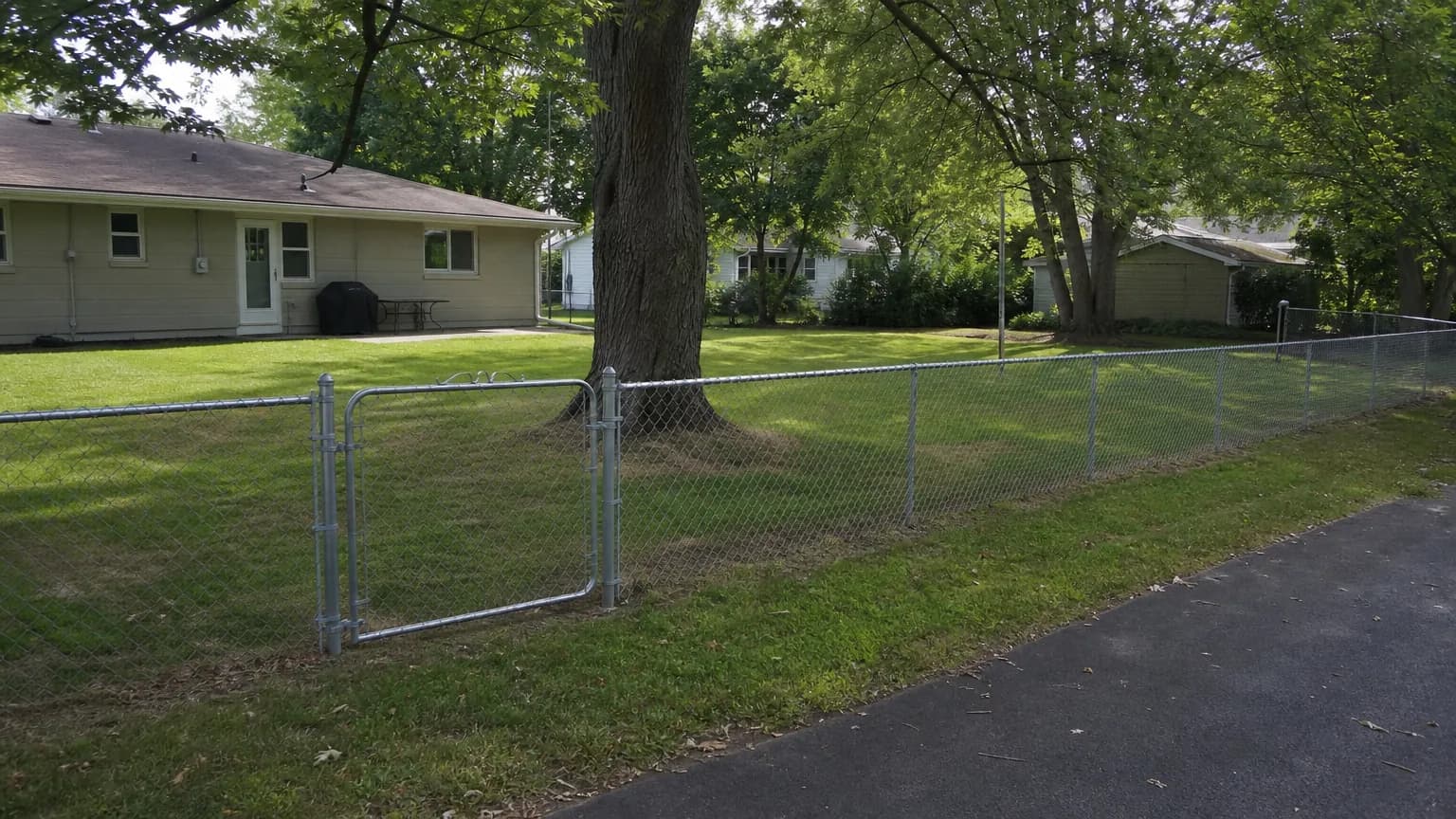
Chain link is the low-cost way to fence a big yard, keep a dog in, or enclose a garden or equipment area. National guides put it at roughly $9–$30 per linear foot installed, with height, wire gauge and coating moving the price. Galvanized is the plain silver look. Black or green vinyl-coated chain link costs more but blends into trees and lawn, which suits wooded lots.
A good chain link job comes down to the terminal posts. Corner, end and gate posts carry the tension of the whole run and are set deeper and heavier than line posts. Ask how the fabric will be tensioned, whether there will be a top rail or a bottom tension wire, and what the gate frames are made of. The chain link fence guide covers heights, coatings, privacy slats and what it costs per foot.
Vinyl, Aluminum and Wrought Iron
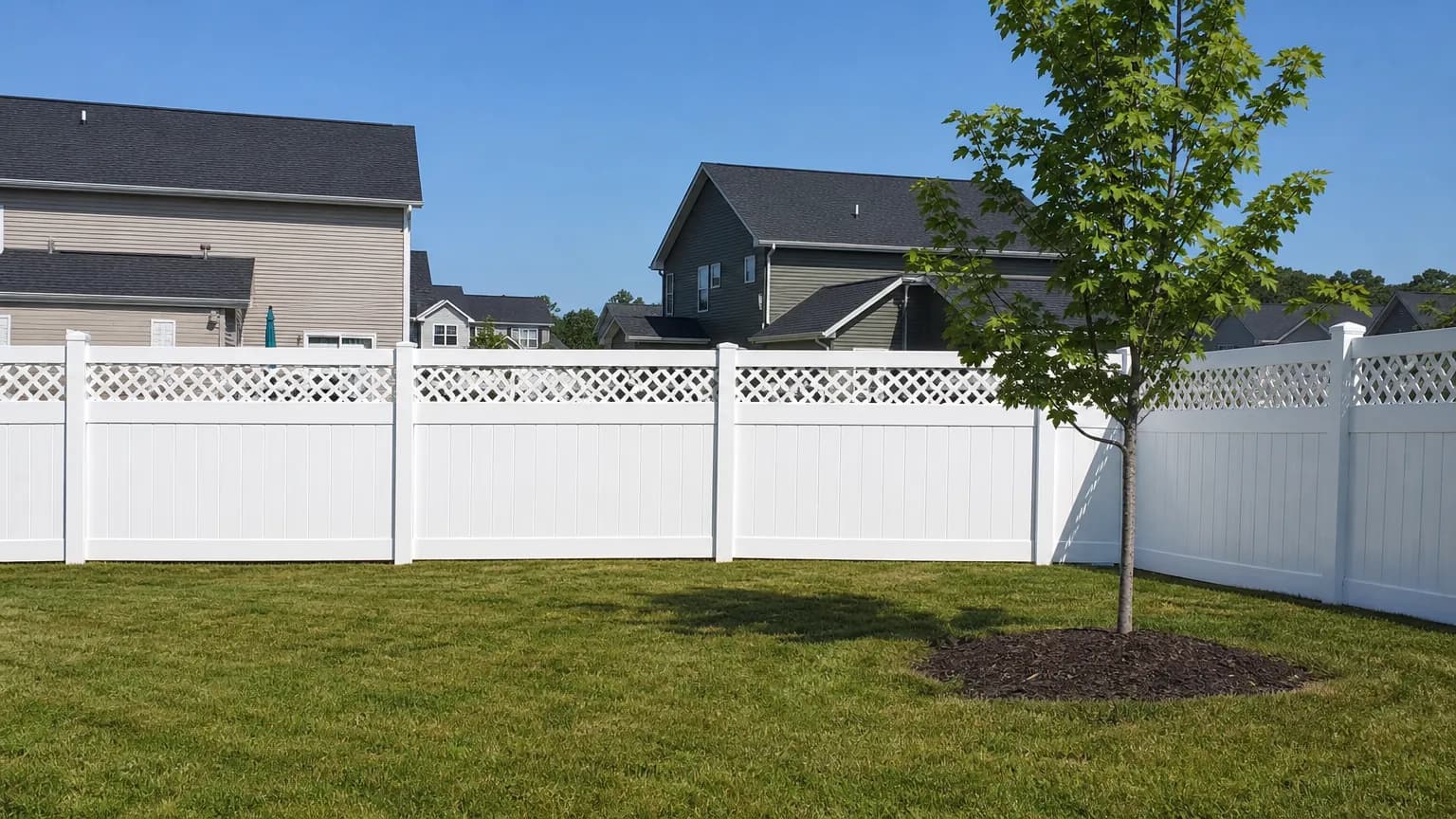
Vinyl fences cost more up front than wood, about $30–$60 per linear foot installed nationally, and in exchange never need stain or paint. They come in privacy, semi-privacy and picket styles, usually white, tan or a wood-grain finish. Vinyl does not rot or feed termites, which matters in North Alabama, but cheap panels can sag or crack, so ask about rail reinforcement and wall thickness.
Black ornamental aluminum, at about $25–$75 per linear foot nationally, is the usual choice for front yards, pool enclosures and lots that want a boundary without blocking a view. Wrought iron and steel run higher, about $50–$85 per linear foot, and are chosen for older homes, estate lots and driveway gates. Decatur's zoning ordinance lists ornamental iron, wrought iron, welded steel and black aluminum among its allowed fence materials.
What a Fence Costs in Huntsville
We could not find any published Huntsville-specific fence pricing, so these are national installed ranges per linear foot. Use them to sanity-check quotes, not as a price. Local contractors set their own numbers after they walk the line.
| Fence | Typical national installed range |
|---|---|
| Chain link | $9–$30 per linear ft |
| Wood (picket or privacy) | $20–$50 per linear ft |
| Wood privacy, 6 ft | $25–$60 per linear ft |
| Vinyl | $30–$60 per linear ft |
| Aluminum | $25–$75 per linear ft |
| Wrought iron | $50–$85 per linear ft |
| Old fence removal | $3–$8 per linear ft |
| Gate installation | about $879–$3,814 per gate |
What moves a quote most: total length, height, the number of gates and corners, slope, rock or chert in the post holes, tearing out an old fence, and access for an auger. Two quotes are only comparable when they cover the same footage, height, post spacing, post setting and gates.
Fence Permits: Huntsville, Madison, the County and Decatur
The rules depend on which side of a city line your house sits on, and in this area that line is easy to cross without noticing. Huntsville surrounds Madison and reaches into four counties.
- City of Huntsville. The city's residential construction FAQ says fences do not require a permit. A fence in the Huntsville Historic District needs approval from the Historic Preservation Commission first. Fence questions go to the City Traffic Engineer at (256) 427-5300.
- City of Madison. The Building Department stopped issuing fence permits on March 1, 2017. The Madison Historic District still needs Historic Preservation Commission approval, and the city may remove a fence in an easement without replacing it if it needs access.
- Unincorporated Madison County (Harvest, Meridianville, Hazel Green, Monrovia, New Market). The county inspection office's residential rules exempt ordinary fences from a building permit, but pools still need a 48-inch barrier. Confirm the height limit with the county before building tall.
- City of Decatur. Decatur does issue fence permits through its Building Department, and its zoning ordinance sets heights, materials and placement rules, including that the finished side faces out.
No permit does not mean no rules. Setbacks, corner-lot sight lines, easements and subdivision covenants all still apply. Ask the contractor what they check before they set the first post.
Call Alabama 811 Before Anyone Digs
Alabama's Underground Damage Prevention Law requires anyone digging, homeowners included, to notify Alabama 811 at least two full working days before excavation, not counting the day you call. Alabama 811 suggests calling 2 to 10 working days ahead, marking the planned fence line in white paint, and hand-digging within 18 inches on either side of any utility mark. Its own fence checklist notes that fencing and landscaping cause a large share of underground utility damage every year.
Post holes are exactly the kind of digging that finds buried gas, power and fiber lines. Most fence contractors place the 811 request themselves. Ask for the ticket number, and do not let anyone auger before the marks are down.
Red Clay, Rain and Termites
Huntsville averages a little over 54 inches of rain a year, wettest from November through May, and the valley soils are mostly red clay weathered from limestone, often with chert. Clay holds water against a post, and wet ground is where wood rots first. A post that is fine above ground can be soft an inch below the grass line after a few wet winters.
The usual answers: set posts deep enough (a common rule of thumb is one-third to one-half of the above-ground height, so 24 to 36 inches for a 6-foot fence, deeper for gate and corner posts), crown the concrete so water runs away from the wood, and use lumber treated for ground contact (AWPA UC4A or heavier). Alabama sits in the highest termite-probability zone in the country, which is one more reason to keep wood off the soil and to look at metal posts or vinyl.
Karst and rock
Much of the Huntsville area is karst, the same limestone that feeds the Big Spring downtown, and the U.S. Geological Survey has mapped sinkhole-prone areas in Madison County. In practice, an auger can hit rock or chert a foot down in one hole and nothing at three feet in the next. Contractors who work locally price for it. Ask how they handle a hole that hits rock.