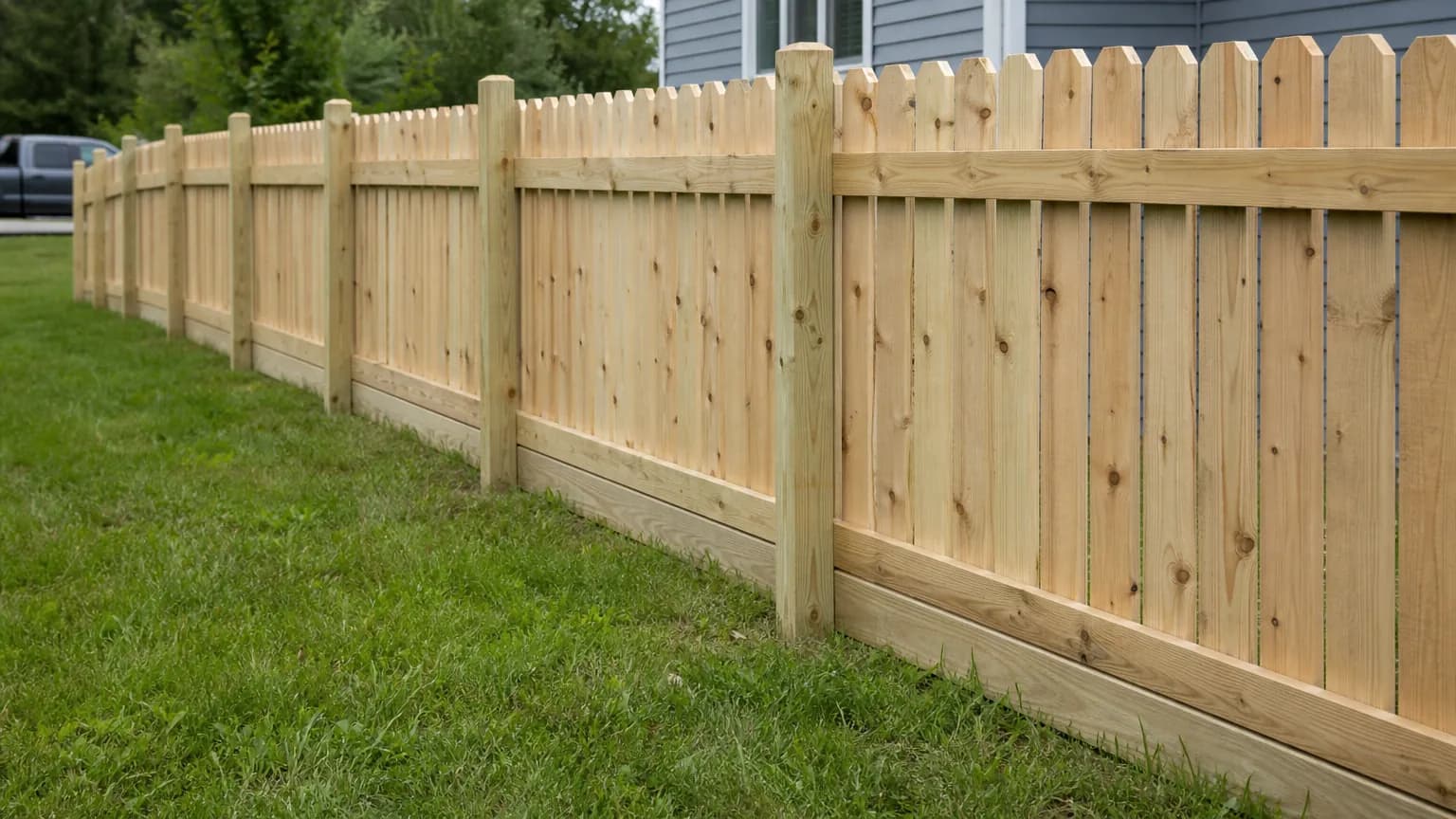
Pressure-treated pine or cedar?
Southern yellow pine, pressure-treated, is the default. It is strong, cheap and widely stocked. It also moves: green-treated pickets shrink as they dry, can cup or twist, and gray in a season without stain. Cedar is lighter, more stable and naturally resistant to decay, and it takes stain evenly, which is why it is chosen for board-on-board and horizontal designs. It costs more per picket.
Many contractors build a hybrid: treated pine or galvanized steel posts in the ground, cedar or pine pickets above. The post is the part that touches soil, so the post is where the treatment rating matters.
What 'ground contact' means on a tag
Treated lumber is sold by use category under American Wood Protection Association standards. UC4A is the ground-contact category and names fence posts among its uses; UC4B is the heavier-duty category for wetter or more demanding conditions. Above-ground lumber (UC3B) belongs in rails and pickets, not in a post hole. Ask what the tag on the posts says.
Wood fence styles
- Dog-ear picket privacy: the classic clipped-corner 6-foot backyard fence.
- Shadowbox and board-on-board: fuller privacy fences. See privacy fences.
- Picket (3 to 4 feet): spaced pickets for front yards and gardens. Decatur, for one, caps front-yard fences at 4 feet in residential districts.
- Horizontal slat: modern look, usually cedar, needs closer post spacing or a center stiffener so boards do not sag.
- Split rail: two or three rails, mostly for marking a line on larger lots. See farm and horse fence.
Termites, rot and the first 6 inches
Alabama sits in the very heavy termite-probability zone, and subterranean termites reach wood through the soil. The ground line is also where clay holds the most water. Most wood fences in the Tennessee Valley that fail early fail in that first 6 inches of post.
- A rot board (a horizontal kickboard at the bottom) keeps pickets off the dirt; it is replaceable when it goes.
- Keep mulch and soil from piling against posts and pickets.
- Concrete crowned above grade sheds water away from the post.
- Stain or seal pickets once the wood is dry enough to take it; see fence staining.
Wood fence cost
National guides put wood fencing at about $20–$50 per linear foot installed, and a 6-foot wood privacy fence at about $25–$60. Cedar, board-on-board, cap-and-trim, and steel posts all push toward the top. No Huntsville-specific pricing is published that we could verify.
| Choice | Effect on a quote |
|---|---|
| Pine pickets, treated pine posts | Lowest wood price |
| Cedar pickets | Higher material cost, better stability |
| Board-on-board or shadowbox | More pickets per foot |
| Galvanized steel posts | More per post, no post rot |
| Cap rail and trim | More lumber and labor |
| Old fence removal | About $3–$8 per linear ft nationally |
Where to check rules
Huntsville and Madison do not issue fence permits, Decatur does, and unincorporated Madison County exempts ordinary fences from a building permit. Historic districts in Huntsville and Madison need preservation commission approval. Whatever the jurisdiction, someone must call Alabama 811 at least two full working days before the post holes are dug.
Main guide: fence companies in Huntsville, AL.