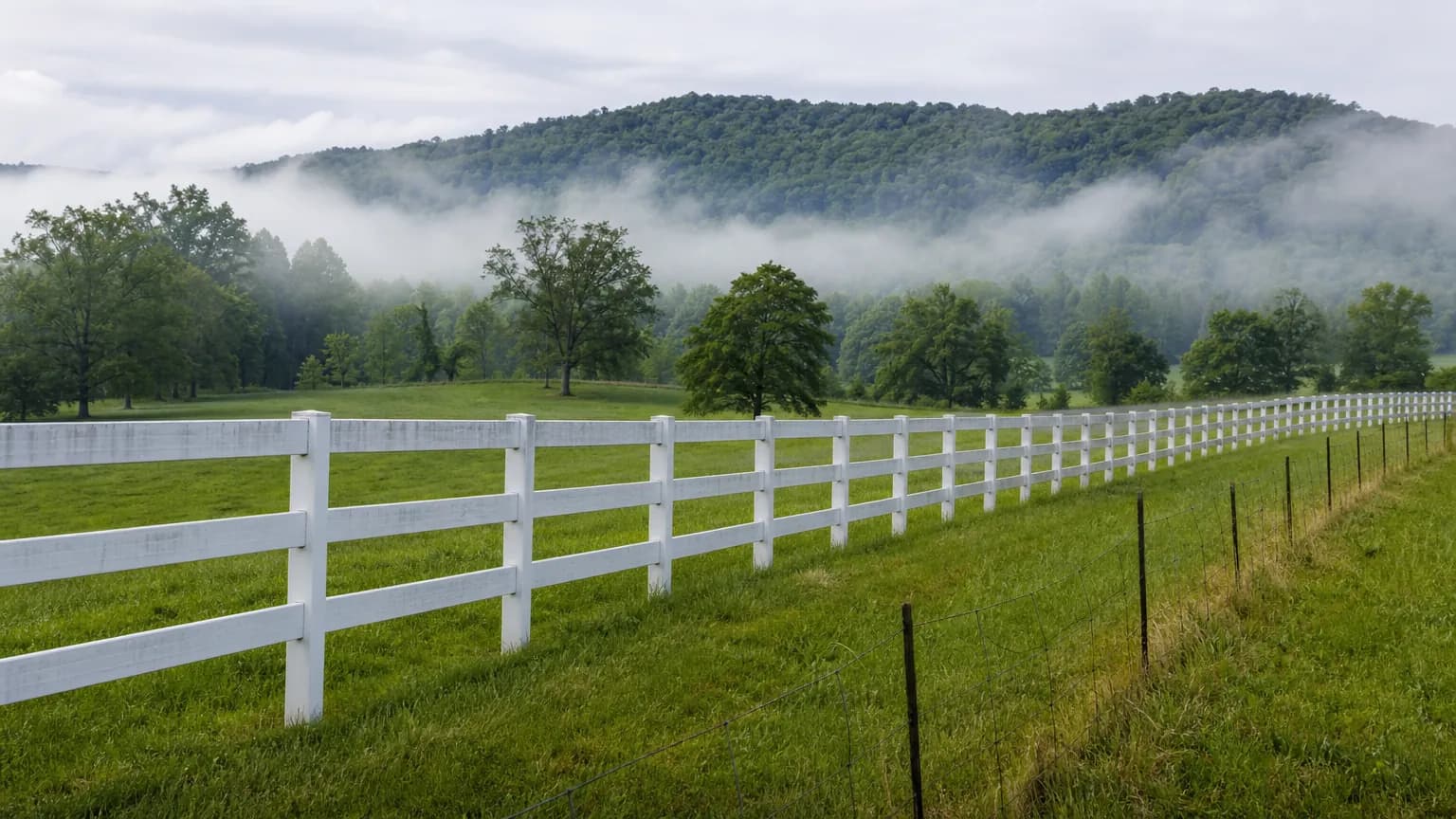
Types of farm fence
- Board fence: three or four wood boards on wood posts, the classic horse-farm look. Painted or stained, high upkeep.
- No-climb horse fence: small-opening woven wire that hooves cannot step through, often with a top board or rail for visibility.
- Woven field fence: graduated woven wire for cattle, goats and sheep.
- Barbed wire: for cattle only. Not for horses, and prohibited on residential lots in many cities; Decatur bans it outside agricultural uses and approved security plans.
- Split rail: two or three rails, mostly for marking a line or a driveway entrance. Wire mesh can be added behind it.
- Electric: a hot wire or tape, often added on top of or inside other fence to keep animals off it.
Corners and braces carry the fence
Woven and high-tensile wire fences are stretched tight, and all that tension ends at the corners and gates. That is what H-braces are for: two heavy posts tied together with a horizontal brace and a diagonal wire. A farm fence with weak corners pulls over, however good the line posts are. Ask how the contractor builds corners and how many line posts they set per hundred feet.
The Tennessee Valley's red clay and chert make post driving and augering uneven. Some contractors drive posts with a hydraulic driver, which can compact soil around the post better than backfilling a hole.
Farm gates and crossings
Tube gates in 10 to 16 foot widths are standard for tractor and trailer access. Plan the gate locations around how equipment actually moves and where water stands after rain. A gate in the low corner of a field becomes a mud hole every spring. See gates for hinge-post sizing.
Rules and utilities
Decatur's zoning ordinance exempts specialized livestock fences on agricultural-use land from its fence standards, and above-ground electric fence is allowed there only for livestock and domestic animals in agricultural and estate districts. In unincorporated county areas, ordinary fences are generally exempt from building permits. Long fence lines cross more buried utilities than a backyard does, so Alabama 811 notification at least two full working days before digging is just as required on a farm.
Cost
We did not find reliable national per-foot figures for farm, horse or woven-wire fence, and none for North Alabama. Price depends on total footage, the number of corners and gates, terrain, clearing the line, and whether posts are driven or set. Get quotes on the same specification from at least two contractors.
Main guide: fence companies in Huntsville, AL.