
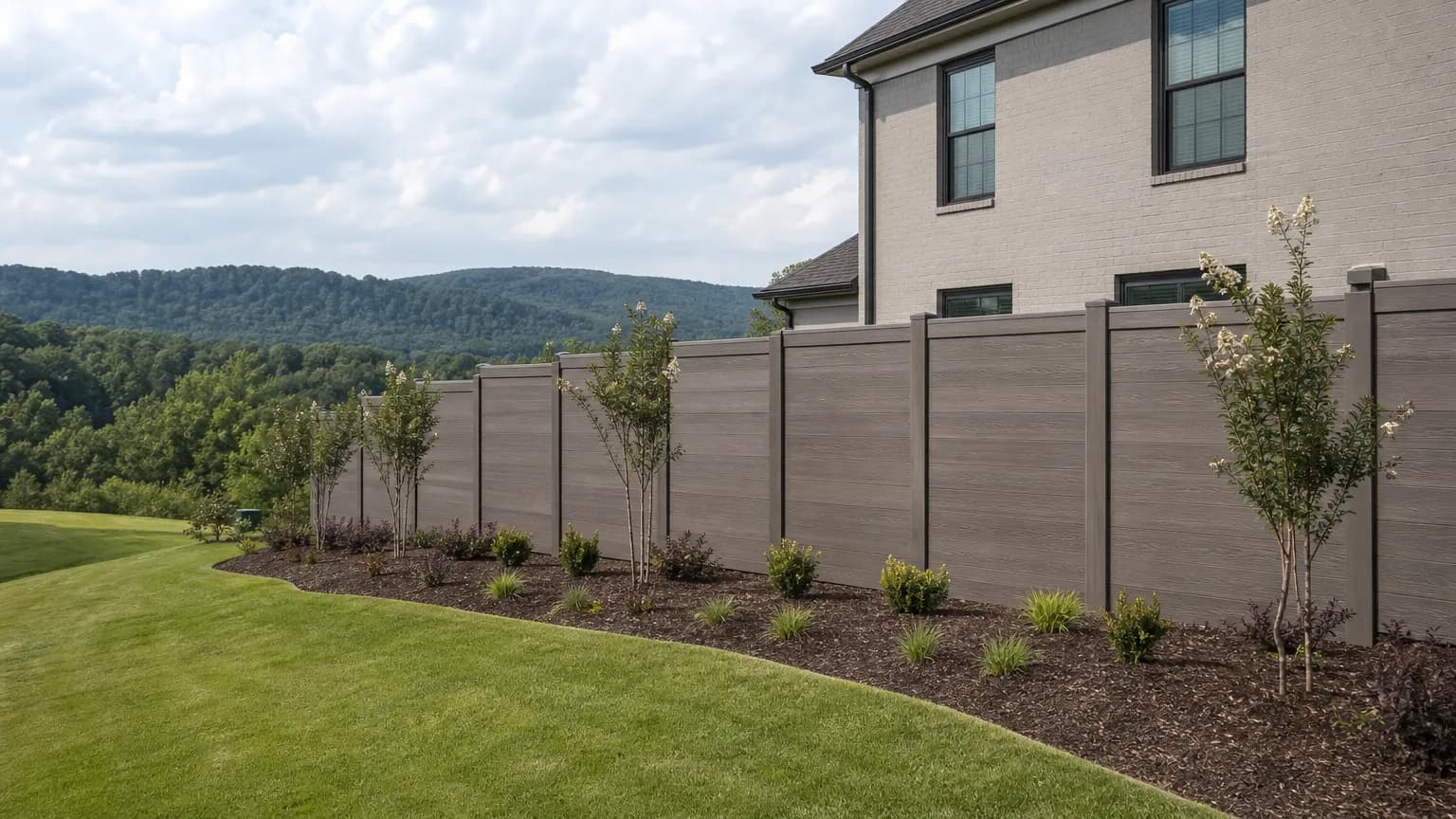
What a composite fence is made of
Composite boards blend wood fiber with plastic. Trex Seclusions, one of the best-known systems, is described by the maker as 95% recycled composite, made from reclaimed wood fiber and recycled plastic film. Boards slide into posts, with an engineered aluminum bottom rail to keep the run straight.
Trex Seclusions at a glance
| Spec | Manufacturer figure |
|---|---|
| Heights | 2 to 12 ft |
| Post spacing | 8 ft on center |
| Posts | Composite |
| Bottom rail | Engineered aluminum |
| Colors | Woodland Brown, Winchester Grey, Saddle, Charcoal Black |
Styles
Cost guides list composite in vertical privacy, horizontal, picket and ranch styles, in heights from 4 to 8 feet. Most local requests are 6-foot backyard privacy fences. For a slatted modern look, see horizontal fences.
Termites, rot and wet clay
Alabama is in the very heavy termite-probability zone, and Tennessee Valley red clay holds water against anything set in it after a little over 54 inches of rain a year. That is the case against plain wood fences: they fail first at the ground line.
Trex's residential warranty states that its fencing will not split, splinter, rot or suffer structural damage from termites or fungal decay. Composite still needs solid footings. Posts set in clay should have concrete crowned above grade so water runs away, and the depth rule of thumb (one-third to one-half of the above-ground height, so 24 to 36 inches for a 6-foot fence) still applies, deeper at gates and corners.
Warranty terms worth reading
- Trex fencing carries a 25-year limited residential warranty.
- It covers splitting, splintering, rot, termite and fungal damage, fading beyond 5 Delta E, and permanent staining.
- It transfers once, within 5 years of purchase.
- It excludes improper installation. Ask the contractor whether they follow the manufacturer's install guide, because a poorly set post can void coverage.
Other brands write their own terms. Get the warranty document for the exact product named on the quote.
Composite vs wood vs vinyl
| Composite | Wood | Vinyl | |
|---|---|---|---|
| Look | Wood grain, matte | Real wood | Smooth plastic |
| Staining | None | Needs periodic stain | None |
| Termites and rot | Warranted against (Trex) | Main failure point | Not affected |
| Published installed cost | $32–$100+ per ft | $20–$50 per ft | $30–$60 per ft |
Composite sits between vinyl and wood: no staining like vinyl, a look closer to wood. It is usually the most expensive of the three.
HOA approval and local rules
Many subdivisions around Madison County set fence material and color in their covenants, and some boards have not seen composite before. Send the HOA the product name, color and a photo, and get approval in writing before material is ordered.
Decatur's fence ordinance lists composite among allowed materials, caps residential front-yard fences at 4 feet and side and rear yards at 6 feet, and requires the finished side to face out. Huntsville and Madison do not issue fence permits; height limits still apply. Unincorporated Madison County requires a permit only for fences over 7 feet. Details are on the fence permits page. Any job needs an Alabama 811 request at least two full working days before digging.
Composite fence cost
Published national ranges disagree widely, so treat these as bookends, not prices. HomeGuide puts installed composite at $50 to over $100 per linear foot, with a typical privacy fence at $75–$95. Another cost guide puts it at $32–$52 per linear foot, or about $5,000–$7,500 for 150 feet of privacy fence. No local price data was found. A contractor's written quote, after measuring, is the only real number. Compare it with fence cost ranges for other materials.
Main guide: fence companies in Huntsville, AL.